elevating your home & business's curb appeal from the top down.

Brick Color Upgrade
Brick color upgrade or staining is a permanent, breathable solution designed to enhance and transform the natural appearance of masonry surfaces without compromising their integrity. Unlike traditional paint, brick stain penetrates into the surface of the brick, bonding with the material rather than forming a film on top. This allows the brick to maintain its natural texture while providing long-lasting, even color that won’t peel, chip, or trap moisture.
Brick staining service offers homeowners and property owners a way to modernize, restore, or completely change the look of their brick while preserving its durability and character. Whether you're updating an outdated exterior or blending new additions with existing brick, staining delivers a clean, natural finish that stands the test of time.
We proudly offer brick staining services in Paris, Cambridge, Brantford, Brant County, Hamilton, and surrounding rural areas for residential, farm, and commercial buildings.


Why Choose Brick Staining Over Painting
Painting brick creates a surface layer that can trap moisture, leading to peeling, cracking, and long-term damage. Brick staining, on the other hand, penetrates the surface and works with the natural properties of the masonry—making it a smarter, longer-lasting investment.
Benefits of Brick Staining
Permanent color solution – Won’t peel, chip, or flake like paint
Breathable finish – Allows moisture to escape, preventing damage to brick
Natural appearance – Enhances the texture instead of covering it
Low maintenance – No frequent reapplication required
UV resistant – Holds color over time, even in harsh Ontario weather
Custom color matching – Blend additions or achieve modern design looks
Increases curb appeal & property value
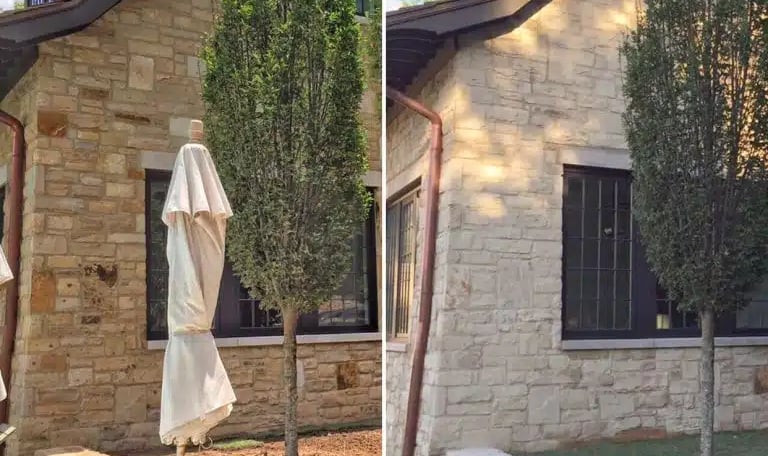
Before: Orange/red dated brick from the 80s–90s
After: Clean charcoal, whitewash tones, or modern neutral
Turn outdated brick into a modern, high-end exterior—without replacing it.
Ideal Surfaces for Brick Staining
Brick staining works best on porous masonry surfaces such as:
Clay brick (most common application)
Concrete block (CMU)
Natural stone (select types, depending on porosity)
Mortar joints
Surfaces Not Suitable for Brick Staining
Previously painted brick (without proper removal), Sealed or coated brick, Vinyl or aluminum siding, Plastic or composite materials, Pressure-treated wood, Smooth, non-absorbent stone
Brick color change Frequently asked questions
Before You Stain Your Brick
Before diving into your staining project, you should consider the type of brick you're working with, the extent of color change you're aiming for and the overall aesthetic you want to achieve. Different bricks absorb stains differently, and your desired look—whether bold and opaque or subtle and natural—will guide your decisions. The surrounding environment, including landscaping, trim colors and architectural style, should complement your stain choice. Let's break down these considerations to ensure your project starts on the right foot.
What Type of Brick do you Have?
Like wood types, different bricks absorb stains differently. The original brick color also plays a part in the final color of the stain. To demonstrate the difference between bricks, here's a list of commonly used bricks around the home, their porosity (how much water the brick type absorbs) and their typical color.
Burnt clay bricks have low porosity and are usually red, but they can also be orange, brown, white, yellow, blue or silver.
Sun-dried clay/mud bricks are highly porous and often come in brownish red, earthy tan or deep purple tones, depending on the minerals in the clay and drying temperature.
Sand lime bricks are low-porosity bricks with good sound insulation properties. They tend to be lighter bricks, ranging in color from dark beige to bright white.
Engineering bricks are nearly non-porous and often used in damp environments. Engineering bricks can be blue, red, brown or black.
Concrete bricks are gray, porous bricks—more porous than Swiss cheese! They are typically gray but can be dyed a variety of colors.
Fly ash clay bricks are less porous than traditional clay bricks, usually gray-white or cement gray.
Firebricks are considered porous, but their porosity varies based on the type of firebrick. Buff is the most common firebrick color but can also be red, black, slate gray, brown, and off-white.
Knowing what type of brick you have will help you to prepare your project properly. Like sun-dried clay brick, a highly porous brick is more likely to absorb stains unevenly. In these situations, you'll want to use a masonry primer.
Desired Aesthetic and Surrounding Environment
As with any project, consider your style and the other colors you plan to use or have in your space. If you're staining exterior brick, find a color that compliments your roof, door and window frame colors.
The 60-30-10 rule, a popular design principle that divides a color scheme into three proportions, can help guide color selection for interior masonry projects.
60% should be your dominant color, typically walls, flooring or large furniture.
30% should be your secondary color that supports and complements the dominant shade.
10% is reserved for accent colors that add visual pop and interest to the space.
When planning your brick staining project, consider how much visual space your masonry occupies in the room. A fireplace or brick accent wall typically accounts for about 30% of the visual space, making it an ideal secondary color element. However, if your brick covers most of the walls, you'll want to stain it in your dominant color since it will establish the room's primary tone and mood.